Since the days of dyeing cloth some colours fade fairly quickly. With the colour black, fading and richness of the colour was always a problem to have when wearing black. It’s a colour that was always hard to maintain. Even during the current days of technology we still have problems with fading black. This was an issue with all colours but this colour has its connections with the pilgrimage.
Black is a colour that is most associated with the pilgrims from the 16th and 17th century. Many of them wore reds, browns and green when they came over from England. The puritans and pilgrims had a very strict fashion code that they lived up to for their religious practices. The practice comes from Sumptuary laws that is to regulate consumption and extravagance in luxury and material things. This was to avoid dressing in a overly layered, wasteful and unseemly clothing that the puritans found immodest. Also, black was a very popular colour for everyone to wear.
Painting of Pilgrims Going to Church by George Henry Boughton, 1867, Oil on canvas. Public domain.
What Puritans were not allowed to wear:
Gold and Silver Lace
Buttons
Silks
Tiffany Hoods
Scarves
Points at their knees
Good pairs of boots
When the English were running away from the rule of Oliver Cromwell to America for religious freedom. They had some traditions they wanted to keep.
Where Did Logwood Black Came From
Detailed drawing of the Haematoxylum campechianum Public Domain – Wikipedia.
The Logwood tree is known as a Haematoxylum campechianum tree. Logwood is one of the many names that this type of plant is called. For example, Blackwood, Bloodwood tree, Bluewood, Campeachy tree, Campeachy wood, Campeche logwood, Campeche wood and, Jamaica wood. The scientific name is translates to bloodtree from Greek. Logwood can grow to 30 to 50 feet with a short crooked trunk. The leaves are oval and heart shaped. They have small yellow flowers that grow from the leaves in clusters. logwood grows in the difficult terrains of mangrove swamps where harvesters would stand on two feet of water during wet seasons.
Logwood is cut down to get to the centre by chopping away to the centre heart of the tree is used for the dyeing process. The sap is discarded while the heart turns black. When it is immersed in water it dyes the water like ink. The best trees were the old trees because they had less sap and were easier to cut. There were a few places that had logging camps for the woods throughout the Caribbean and Central America.
The colorant wasn’t lightfast and would remain soluble in water after drying. If a modifier was added, like iron, it would greatly improve the lightfast of the dye. Lightfast means that the color will not discolour [fade] when exposed to light, like the sun. The colours that logwood created were deep purple, bluish-grey, black and sometimes greens when combined with other dyes. Deep purple can be created with oak mordant. Bluish-grey can be created with alum mordant. Black can be created with iron mordant. Weld and logwood created variations of green.
The wood was also used as traditional medicine. It was once used to treat cholera, diarrhea and dysentery also excessive bleeding from uterus, lungs, or bowels. It is also used as an astringent.
Golden Age of Piracy
Most of the woods were exported to Spain and England for textile use. The Spaniards used the tree bark as a ballast and didn’t start to use the bark as a dye until the 15th century. It came an important commodity that buccaneers used to trade with in the 17th century. After Spain declared all of Central America and South America belonging to King Ferdinand IV, despite England, France, Dutch colonies existed on those land. Until 1673, England declared that Logwood was banned for use because it was very profitable for Spain. When England and Spain had a truss, England cultivated crops in Belize for marketplace resell.
It had a good exchange rate similar to the gold rush in the 19th century. The British settlers and buccaneers would harvest the bark for profit and attack the Spaniards approaching the bay. In Belize, the people near the bay would be called Baymen and it is still a part of their culture by the crest on the flag. 13,000 tons of logwood were sent to England each year. It was also introduced to other West Indies and Caribbean islands like Jamaica and Haiti where it became naturalized and harvested on a plantation. The Spanish didn’t like that interfere of their harvest on land that they usurped from the natives and the other colonies. They saw it as a form of piracy. The Spaniards tried to push out the English buccaneers. Between 1672 to 1674, the Spanish crown issued decrees explicitly forbidding logwood harvesting who were not Spaniards and urging colonial officials to take military action for interlopers. Spanish naval ships patrolled along the coast to capture English merchantmen carrying logwood and raid what settlements they could. But English buccaneers addressed that the indigenous people were harvesting the logwood from their own land and it was legal. Nonetheless, the British crown would issue orders to the Governor of Jamaica to forbid logwood trade in 1679.
A pivotal battle of Laguna de Términos was a Spanish naval expedition in 1716 that successfully expelled English and other foreign logwood cutters and buccaneers who had illegally established a settlement on Isla del Carmen. The Spanish victory at this specific battle secured the area for the Spanish Crown for further logwood extraction, though the battle did not permanently end the conflict over the lucrative logwood trade in the region between the English and Spaniard. Following Spain’s loss of Isla del Carmen in the Battle of Laguna de Términos in 1716, British settlers, freed and enslaved black populations solidified their presence to defend their settlement against the Spanish force for the Battle of St. George’s Caye in 1798.
Painting of Pirate’s Bay by David Cox, 1826, watercolour of paper. Public domain – Wikipedia.
The over supply of logwood killed the industry due to becoming over saturated. It was replaced by synthetic dyes in the 19th century retiring the natural colour. Mahogany and brazilwood logging replaced logwood for the growing demand for timber.
Resources:
Finlay, Victoria. “Logwood Black.” The Brilliant History of Color in Art, Getty Publications, Los Angeles, CA, USA, 2014, pp. 54.


 Under The Moonlight
Since the days of dyeing cloth some colours fade fairly quickly. With the colour black, fading and richness of the colour was always a problem to have when wearing black. It’s a colour that was always hard to maintain. Even during the current days of technology we still have problems with fading black. This was an issue with all colours but this colour has its connections with the pilgrimage.
Black is a colour that is most associated with the pilgrims from the 16th and 17th century. Many of them wore reds, browns and green when they came over from England. The puritans and pilgrims had a very strict fashion code that they lived up to for their religious practices. The practice comes from Sumptuary laws that is to regulate consumption and extravagance in luxury and material things. This was to avoid dressing in a overly layered, wasteful and unseemly clothing that the puritans found immodest. Also, black was a very popular colour for everyone to wear.
What Puritans were not allowed to wear:
When the English were running away from the rule of Oliver Cromwell to America for religious freedom. They had some traditions they wanted to keep.
Where Did Logwood Black Came From
The Logwood tree is known as a Haematoxylum campechianum tree. Logwood is one of the many names that this type of plant is called. For example, Blackwood, Bloodwood tree, Bluewood, Campeachy tree, Campeachy wood, Campeche logwood, Campeche wood and, Jamaica wood. The scientific name is translates to bloodtree from Greek. Logwood can grow to 30 to 50 feet with a short crooked trunk. The leaves are oval and heart shaped. They have small yellow flowers that grow from the leaves in clusters. logwood grows in the difficult terrains of mangrove swamps where harvesters would stand on two feet of water during wet seasons.
Logwood is cut down to get to the centre by chopping away to the centre heart of the tree is used for the dyeing process. The sap is discarded while the heart turns black. When it is immersed in water it dyes the water like ink. The best trees were the old trees because they had less sap and were easier to cut. There were a few places that had logging camps for the woods throughout the Caribbean and Central America.
The colorant wasn’t lightfast and would remain soluble in water after drying. If a modifier was added, like iron, it would greatly improve the lightfast of the dye. Lightfast means that the color will not discolour [fade] when exposed to light, like the sun. The colours that logwood created were deep purple, bluish-grey, black and sometimes greens when combined with other dyes. Deep purple can be created with oak mordant. Bluish-grey can be created with alum mordant. Black can be created with iron mordant. Weld and logwood created variations of green.
The wood was also used as traditional medicine. It was once used to treat cholera, diarrhea and dysentery also excessive bleeding from uterus, lungs, or bowels. It is also used as an astringent.
Golden Age of Piracy
Most of the woods were exported to Spain and England for textile use. The Spaniards used the tree bark as a ballast and didn’t start to use the bark as a dye until the 15th century. It came an important commodity that buccaneers used to trade with in the 17th century. After Spain declared all of Central America and South America belonging to King Ferdinand IV, despite England, France, Dutch colonies existed on those land. Until 1673, England declared that Logwood was banned for use because it was very profitable for Spain. When England and Spain had a truss, England cultivated crops in Belize for marketplace resell.
It had a good exchange rate similar to the gold rush in the 19th century. The British settlers and buccaneers would harvest the bark for profit and attack the Spaniards approaching the bay. In Belize, the people near the bay would be called Baymen and it is still a part of their culture by the crest on the flag. 13,000 tons of logwood were sent to England each year. It was also introduced to other West Indies and Caribbean islands like Jamaica and Haiti where it became naturalized and harvested on a plantation. The Spanish didn’t like that interfere of their harvest on land that they usurped from the natives and the other colonies. They saw it as a form of piracy. The Spaniards tried to push out the English buccaneers. Between 1672 to 1674, the Spanish crown issued decrees explicitly forbidding logwood harvesting who were not Spaniards and urging colonial officials to take military action for interlopers. Spanish naval ships patrolled along the coast to capture English merchantmen carrying logwood and raid what settlements they could. But English buccaneers addressed that the indigenous people were harvesting the logwood from their own land and it was legal. Nonetheless, the British crown would issue orders to the Governor of Jamaica to forbid logwood trade in 1679.
A pivotal battle of Laguna de Términos was a Spanish naval expedition in 1716 that successfully expelled English and other foreign logwood cutters and buccaneers who had illegally established a settlement on Isla del Carmen. The Spanish victory at this specific battle secured the area for the Spanish Crown for further logwood extraction, though the battle did not permanently end the conflict over the lucrative logwood trade in the region between the English and Spaniard. Following Spain’s loss of Isla del Carmen in the Battle of Laguna de Términos in 1716, British settlers, freed and enslaved black populations solidified their presence to defend their settlement against the Spanish force for the Battle of St. George’s Caye in 1798.
The over supply of logwood killed the industry due to becoming over saturated. It was replaced by synthetic dyes in the 19th century retiring the natural colour. Mahogany and brazilwood logging replaced logwood for the growing demand for timber.
Resources:
Finlay, Victoria. “Logwood Black.” The Brilliant History of Color in Art, Getty Publications, Los Angeles, CA, USA, 2014, pp. 54.
http://thepirateempire.blogspot.com/2017/07/logwood-cutters.html?m=1
https://www.atlasobscura.com/articles/sumptuary-laws-puritan-fashion-colonies-modesty
https://www.encyclopedia.com/social-sciences-and-law/law/law/sumptuary-laws
https://fee.org/articles/the-puritan-experiment-with-sumptuary-legislation/
http://www.newenglandhistoricalsociety.com/puritan-dress-code-and-outrage-slashed-sleeves/
http://www.chem.uwimona.edu.jm/courses/CHEM2402/Textiles/Logwood.html
https://www.cambridge.org/core/journals/itinerario/article/from-piracy-to-mechanization-the-atlantic-logwood-trade-15501775/45B0FCE2C9850515AB4F17B2FB459C45
Banner Credit:
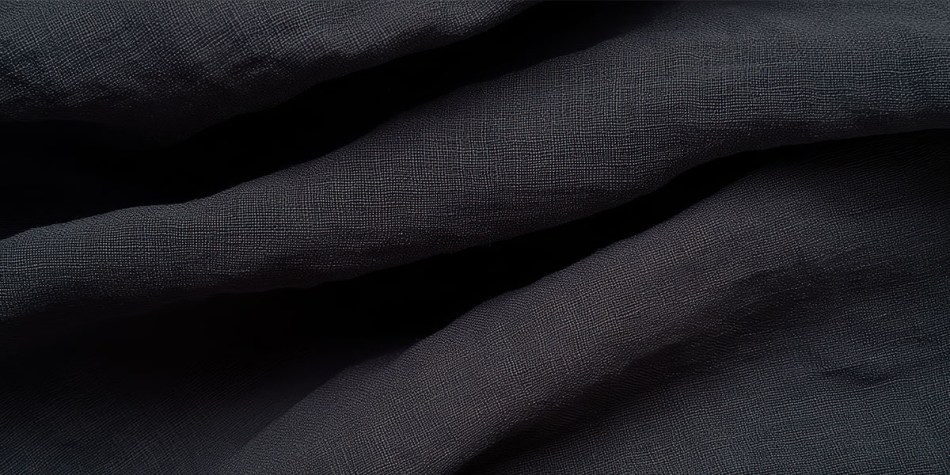
A photograph of Textured fabric displays rich black color with soft folds and shadows by Anh Pham Tuan on Vecteezy.
Share this: