If you were ever walking along the Maldo beach in the Maldives at sunset or going deep ocean diving, small little creatures glow a bright blue light. This light is produced naturally called bioluminescence. Some animals have this ability, mostly insects like fireflies or aquatic animals like jellyfish. The light can lure prey, scare enemies or attract a mate.
The light is produced naturally by chemical reactions in molecules called luciferins (the light-emitting compounds) and luciferases (the enzymes that catalyze the reaction.) When luciferins react with oxygen it can start the production of light as a byproduct but a low energy light. It’s called luciferins and luciferases because it named Lucifer is the light bringer.
A list of all the creatures that glow:
- Blue
- Red
- White
- Purple
- Yellow
The glowing is a part of the survival of the animals and to find food. The glowing parts can dangle from their heads, or be a part of their scales, torso, or eyes. It’s to disguise their body from predators. They can flash lights, flicker lights, or turn on like a hanging wall light near danger.
These are caused by chemical reactions within their bodies. The glow can disguise the shape which can cause confusion to the predator or their prey.
When bioluminescence has different reactions if the animal is above ground or underwater. If the animal is underwater, it can allure the prey towards the light trapping the animal to be eaten. If the animal is above ground, it can be a beacon of warning that the glowing creature could be poisonous.
Before safety lanterns were used dried fish skins made dull light in coal mines where candlelight would have been deadly. In antiquity, bioluminescent fungi and fireflies were thought to have mystical powers and connecting to omens from the gods.
Many bioluminescent creatures were used to help travelers navigate an area. In European folklore, fireflies were thought to be the spirits of the dead helping travelers at night. Mariners and sea men used bioluminescent creatures like glowing plankton to avoid bumping into sea walls and reefs especially in the Caribbean and the Pacific Ocean.
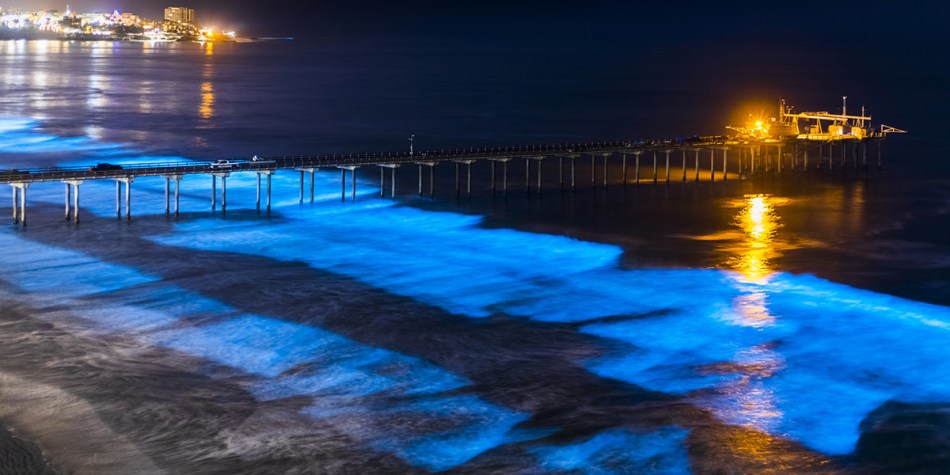
Banner Credit: ID 186177646 @ Kevin Key | Dreamstime.com “Bioluminescent tide makes the waves glow blue around the Scripps Pier in La Jolla, California. Bioluminescent algae blooms like the ever-popular dinoflagellate marine algae called Sea Sparkle are most frequently observed away from shorelines. Though beautiful in the dead of night, during the day these blooming phytoplankton are less than stunning. They often turn ocean water red and murky, and emit a distasteful smell of decay that comes from the algae starving the water of oxygen.” – Kevin Key


 Under The Moonlight
If you were ever walking along the Maldo beach in the Maldives at sunset or going deep ocean diving, small little creatures glow a bright blue light. This light is produced naturally called bioluminescence. Some animals have this ability, mostly insects like fireflies or aquatic animals like jellyfish. The light can lure prey, scare enemies or attract a mate.
The light is produced naturally by chemical reactions in molecules called luciferins (the light-emitting compounds) and luciferases (the enzymes that catalyze the reaction.) When luciferins react with oxygen it can start the production of light as a byproduct but a low energy light. It’s called luciferins and luciferases because it named Lucifer is the light bringer.
A list of all the creatures that glow:
The glowing is a part of the survival of the animals and to find food. The glowing parts can dangle from their heads, or be a part of their scales, torso, or eyes. It’s to disguise their body from predators. They can flash lights, flicker lights, or turn on like a hanging wall light near danger.
These are caused by chemical reactions within their bodies. The glow can disguise the shape which can cause confusion to the predator or their prey.
When bioluminescence has different reactions if the animal is above ground or underwater. If the animal is underwater, it can allure the prey towards the light trapping the animal to be eaten. If the animal is above ground, it can be a beacon of warning that the glowing creature could be poisonous.
Before safety lanterns were used dried fish skins made dull light in coal mines where candlelight would have been deadly. In antiquity, bioluminescent fungi and fireflies were thought to have mystical powers and connecting to omens from the gods.
Many bioluminescent creatures were used to help travelers navigate an area. In European folklore, fireflies were thought to be the spirits of the dead helping travelers at night. Mariners and sea men used bioluminescent creatures like glowing plankton to avoid bumping into sea walls and reefs especially in the Caribbean and the Pacific Ocean.
Banner Credit: ID 186177646 @ Kevin Key | Dreamstime.com “Bioluminescent tide makes the waves glow blue around the Scripps Pier in La Jolla, California. Bioluminescent algae blooms like the ever-popular dinoflagellate marine algae called Sea Sparkle are most frequently observed away from shorelines. Though beautiful in the dead of night, during the day these blooming phytoplankton are less than stunning. They often turn ocean water red and murky, and emit a distasteful smell of decay that comes from the algae starving the water of oxygen.” – Kevin Key
Share this: