When people have the blues you know they are sad. When it’s cold outside and everything looks bluer because if the cooler temperature experts say that could cause seasonal affection disorder or SAD. Or a case of the blue Mondays if it’s the first coldest Monday of the new year. Why is blue connected with sadness?
There’s a history calling sadness the blues that change with different cultures. In modern day Canada, blue can be seen as a soothing, productive colour. While in Latin America, it’s a mourning colour. In Sanskrit, blue is the throat chakra colour meaning high energy and communication. But all over the world the colour blue is associated with trust, tranquility, dignity and serenity.
The association of sadness and the colour blue has no real based in psychology that the colour can cause depression. The colour might spark an emotional response through cultural associations like a low mood or sadness but it’s not clinical. The exact cause of depression is not known but trauma, chronic stress, terrible environment, genetics, physical illness, and medication are possible factors.
The connotations of blue being a sad colour is cultural. Depending on the exposure of what is the connection people make to that colour can be based on experience like a person living in a rainy place who sees seldom sunlight might associate yellow with joy. In places where the names blue and green are interchangeable, sadness may not come to mind.
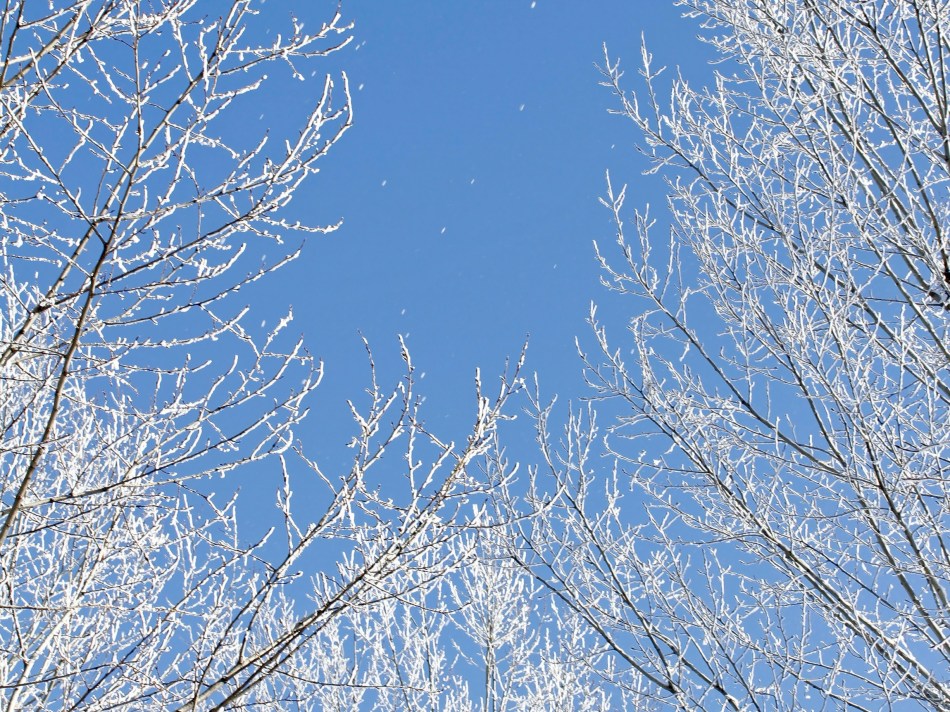
A clear blue sky is seen through the branches of a tree – By Maria Willow on Unsplash
The connection of emotions and colours is studied neurotransmitter dopamine between blue and yellow. In the paper “Feeling blue and seeing blue: Sadness may impair color perception” written by psychology researcher Christopher Thorstenson of the University of Rochester in 2015 studied how mood and emotion can affect how we see the world around us through perception. The participants watch animated film clips intentded to envoke sadness or a standup comedy clip to envoke amusement. Then the participants were told to view an axis chart with red, green, yellow and blue. Participants who watched the sad clips then viewed the colours on a blue-yellow axis had less identifying accuracy on the blue-yellow axis spectrum than people who watched neutral film. Sadness, in this study, was responsible for colour perception.
This theory of sadness comes from the Western society because of a few reasons. How Western society uses blue in art and literature, the development of how the colour blue is recognized as a distinct colour in Western society, how blue is a rare colour. First of all, not everyone experiences seeing the colour blue in nature by flowers, sky, etc. but by industrial inventions like through technology or industries. Therefore, the colour blue may not be associated with anything like how most cultures associate red with blood, anger, danger and passion.
Canada photo under white skies by Stephen H from Unsplash.
In the Renaissance and Middle Ages, side illustrations would show people with blue lips to indicate depression but those very lips also indicted a loss of life. “Blue” was first used in Complaints from Mars by Chaucer in 1385. He wrote “Wyth teres blewe and with a wounded herte.” In modern English translates to: “With tears of blue and with a wounded heart.”
Blue was the colour that artists and writers used to describe melancholy during the 18th and 19th centuries (the age of Romanticism), the colour was usually used to describe loneliness, sadness and despair. Romantic poet William Wordsworth used the colour blue to describe his emotions.
Spiritual painting used blue to envoke emotion and spirituality. During this time, the colour blue was used on the Virgin Mary and the representational view of Heaven. Blue was a statue colour that a few people could afford.
In merchant sail times, blue flags would fly and the ship’s hull would be painted blue if the captain died while at sea. This was the symbol of grief and melancholy.
Washington Irving used the term “the blues” in 1807 as a symptom of sadness. Irving shortened the phrase “blue devils” a Elizabethan symptom meaning meancing presence. The blues is a musical form that influenced early jazz that expressed feeling of sadness and struggles with an innovative rhythm.
The phrase the “blue devils” is a description of low spirits or sadness from the 17th century which has been referenced in many old texts, manuscripts and Medieval illustrations. It was believed that these blue devils were blamed for poor blood circulation or oxygenation in the blood causing low spirits. Within time, blue devils started to mean conjured up depression and melancholy.
Alston, whose life hath been accounted evill, And therfore cal’de by many the blew devill, S[t]ruck with remorse of his ill gotten pelfe, Would in dispaire have made away himselfe. ― The Times’ Whistle, circa 1616
Banner Credit: Cropped Image – A clear blue sky is seen through the branches of a tree – By Maria Willow on Unsplash


 Under The Moonlight
When people have the blues you know they are sad. When it’s cold outside and everything looks bluer because if the cooler temperature experts say that could cause seasonal affection disorder or SAD. Or a case of the blue Mondays if it’s the first coldest Monday of the new year. Why is blue connected with sadness?
There’s a history calling sadness the blues that change with different cultures. In modern day Canada, blue can be seen as a soothing, productive colour. While in Latin America, it’s a mourning colour. In Sanskrit, blue is the throat chakra colour meaning high energy and communication. But all over the world the colour blue is associated with trust, tranquility, dignity and serenity.
The association of sadness and the colour blue has no real based in psychology that the colour can cause depression. The colour might spark an emotional response through cultural associations like a low mood or sadness but it’s not clinical. The exact cause of depression is not known but trauma, chronic stress, terrible environment, genetics, physical illness, and medication are possible factors.
The connotations of blue being a sad colour is cultural. Depending on the exposure of what is the connection people make to that colour can be based on experience like a person living in a rainy place who sees seldom sunlight might associate yellow with joy. In places where the names blue and green are interchangeable, sadness may not come to mind.
The connection of emotions and colours is studied neurotransmitter dopamine between blue and yellow. In the paper “Feeling blue and seeing blue: Sadness may impair color perception” written by psychology researcher Christopher Thorstenson of the University of Rochester in 2015 studied how mood and emotion can affect how we see the world around us through perception. The participants watch animated film clips intentded to envoke sadness or a standup comedy clip to envoke amusement. Then the participants were told to view an axis chart with red, green, yellow and blue. Participants who watched the sad clips then viewed the colours on a blue-yellow axis had less identifying accuracy on the blue-yellow axis spectrum than people who watched neutral film. Sadness, in this study, was responsible for colour perception.
This theory of sadness comes from the Western society because of a few reasons. How Western society uses blue in art and literature, the development of how the colour blue is recognized as a distinct colour in Western society, how blue is a rare colour. First of all, not everyone experiences seeing the colour blue in nature by flowers, sky, etc. but by industrial inventions like through technology or industries. Therefore, the colour blue may not be associated with anything like how most cultures associate red with blood, anger, danger and passion.
In the Renaissance and Middle Ages, side illustrations would show people with blue lips to indicate depression but those very lips also indicted a loss of life. “Blue” was first used in Complaints from Mars by Chaucer in 1385. He wrote “Wyth teres blewe and with a wounded herte.” In modern English translates to: “With tears of blue and with a wounded heart.”
Blue was the colour that artists and writers used to describe melancholy during the 18th and 19th centuries (the age of Romanticism), the colour was usually used to describe loneliness, sadness and despair. Romantic poet William Wordsworth used the colour blue to describe his emotions.
Spiritual painting used blue to envoke emotion and spirituality. During this time, the colour blue was used on the Virgin Mary and the representational view of Heaven. Blue was a statue colour that a few people could afford.
In merchant sail times, blue flags would fly and the ship’s hull would be painted blue if the captain died while at sea. This was the symbol of grief and melancholy.
Washington Irving used the term “the blues” in 1807 as a symptom of sadness. Irving shortened the phrase “blue devils” a Elizabethan symptom meaning meancing presence. The blues is a musical form that influenced early jazz that expressed feeling of sadness and struggles with an innovative rhythm.
The phrase the “blue devils” is a description of low spirits or sadness from the 17th century which has been referenced in many old texts, manuscripts and Medieval illustrations. It was believed that these blue devils were blamed for poor blood circulation or oxygenation in the blood causing low spirits. Within time, blue devils started to mean conjured up depression and melancholy.
Banner Credit: Cropped Image – A clear blue sky is seen through the branches of a tree – By Maria Willow on Unsplash
Reference
https://www.huffpost.com/entry/color-blue-sadness_b_13233778
https://www.verywellmind.com/the-color-psychology-of-blue-2795815
https://psychcentral.com/depression/decreased-perception-of-color-in-depression
https://www.sciencedaily.com/releases/2015/09/150902112006.htm
https://medium.com/@anyaluapple/defining-blue-and-its-connection-to-sadness-70f9d5f6cf34
https://www.apa.org/news/podcasts/speaking-of-psychology/color-emotion
https://artsartistsartwork.com/history-of-the-colour-blue-in-art/
https://newsletter.colorphilia.com/melancholic-witches-blue-devils/
Share this: