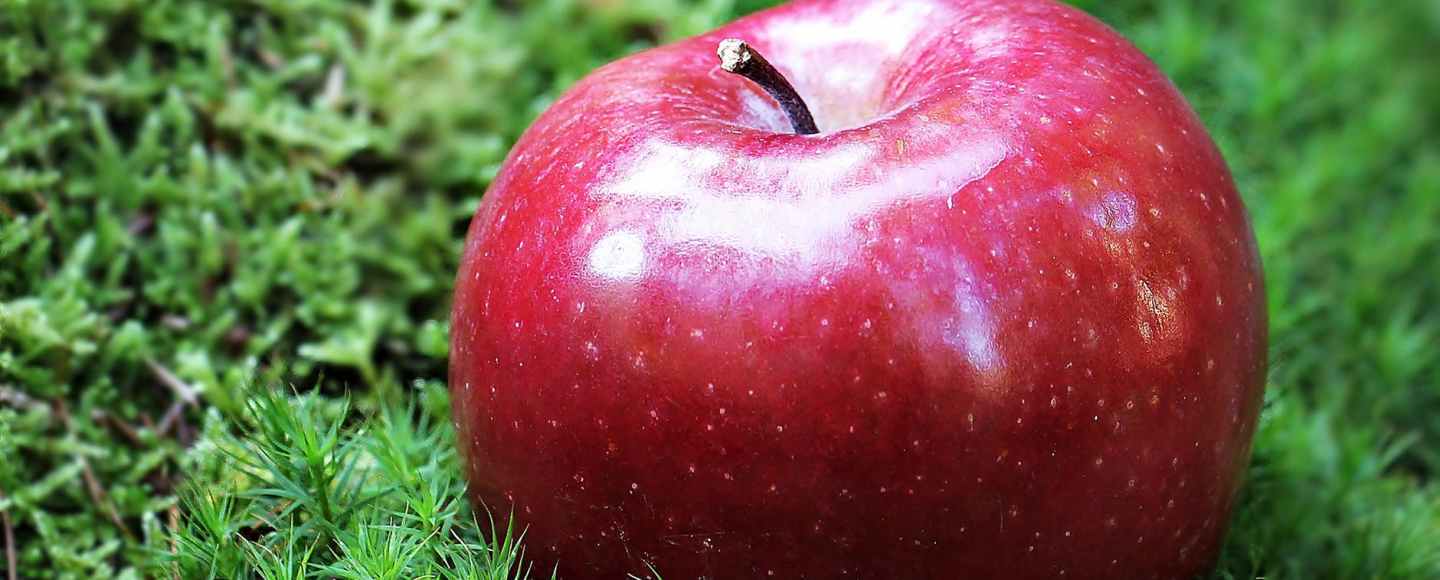
The apple has influenced many people throughout history. Apples are also a common symbol of love, beauty, and wisdom in different cultures. They usually are cultivated around the summertime and are used in many iconic dishes like the apple pie, apple ice cream, apple cider, and baked apple crumble.
This list is of the many ideas that came from when people were thinking about an apple.
- In the Bible: Adam bit a piece of the Forbidden Fruit from the Tree of Knowledge. Most people assume it’s an apple, and it became the symbolic representation of the forbidden fruit due to a Latin word play and artistic depictions, rather than a direct biblical reference.
- Ancient Greece: The “Trojan apple fruit” refers to the Golden Apple of Discord from Greek mythology, not a specific type of fruit. This apple, tossed by Eris at a wedding, sparked a dispute among goddesses that led to the Judgement of Paris and the Trojan War.
- Apples were the first ornaments on a Christmas tree, symbolizing the Garden of Eden. This was redone to represent winter fruits and other vegetation.
- Newton’s Theory of Gravity: While not literally hit on the head by an apple, the story of Isaac Newton observing an apple falling from a tree is often cited as the inspiration for his theory of gravity
- Snow White: Snow White bit the poison apple given to her by the evil witch/stepmother after the dwarves told her not to talk to strangers or open the door.
- Shakespeare: Shakespeare uses two metaphorical terms for apples: Rotten Apple and Apple-John. A rotten apple is a person who is good-looking on the outside but rotten inside. It’s used to describe a corrupt or deceptive person. Shakespeare uses the term in Taming of the Shrew when Hortensio uses the phrase “there’s small choice in rotten apples” (Act 1, Scene I) to express his frustration with finding a suitable wife. An apple-john is a preserved apple kept for two years, with the majority of water lost, appearing shrivelled and wrinkled. It first appeared in Henry IV, Part I, by Falstaff conversing with Bardolph: “Why my skin hangs about me like an like an old lady’s loose gown; I am withered like an old apple-john.” (Act 3, Scene III).
- Piassco: Still Life with Apples demonstrates that the genre of still life can be a vehicle for faithfully representing not only objects but also the appearance of light and space.
- Apple: The Apple Computer’s logo was based on a bitten apple. The logo is a pun; a bite of an apple because it shows what the company deals with daily, bytes.
- Apple Records: The Beatles’ record label, Apple Records, was inspired by a painting of a Granny Smith apple, demonstrating the apple’s influence on popular culture.
- Johnny Appleseed: Johnny Appleseed, real name John Chapman, was an American pioneer gardener who introduced trees grown with apple seeds by creating nurseries of apple trees he planted and took care of to grow and then sell. He was always seen carrying a leather bag of seeds he collected from cider mills. He planted apple trees in Pennsylvania, Ohio, Indiana, Illinois, and Ontario, as well as the northern counties of West Virginia.
Reference:
Independent – The apple’s enduring sphere of influence
https://waapple.org/johnny-appleseed/


 Under The Moonlight
The apple has influenced many people throughout history. Apples are also a common symbol of love, beauty, and wisdom in different cultures. They usually are cultivated around the summertime and are used in many iconic dishes like the apple pie, apple ice cream, apple cider, and baked apple crumble.
This list is of the many ideas that came from when people were thinking about an apple.
Reference:
Independent – The apple’s enduring sphere of influence
https://waapple.org/johnny-appleseed/
Share this: